Shelf Life: Julian Barnes, The Sense of an Ending
Julian Barnes, The Sense of an Ending. Knopf, 2011. 163pp. Link.
Source: checked out from San Diego Public Library
This time I read it I kept thinking about the fictions with quietly obtuse narrators (Remains of the Day, "The Dead," "Gerontion") who, it occurred to me, are also hypermasculinized and whose inadequacy as perceivers and chroniclers of their own reality comes as a consequence of their retreat into the dull safety of their gendered space–not misogyny but I guess a kind of reticent gynophobia.
I also thought about its title, shared with Frank Kermode's book of lectures on the theory of fiction (apparently coincidentally), and the way that Kermode's focus on the shaping of dissonances (rather than suffering in helplessness) of of life distinguishes fiction from reality. (The critic's role is to explain how the shaping works and why it matters.)
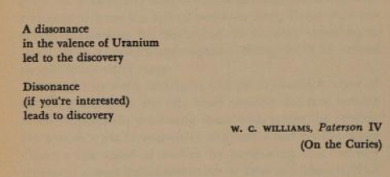
Kermode has this lovely epigraph from Williams's Paterson before his fifth lecture on "Literary Fiction and Reality." It's quite perceptive about how Barnes's narrator untangles the knotted backing of the tapestry, which is all he can see of the far more interesting lives of others:
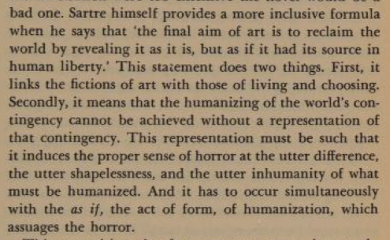
And also I remembered Kermode's discussion of Sartre later in the lecture, which is smart and interesting in that it locates the sense of horror in the urge to fiction and the sense of relief in its writing. This is also very Barnesian:
It was a nice book that suggested so much more than it said. I always like that.